
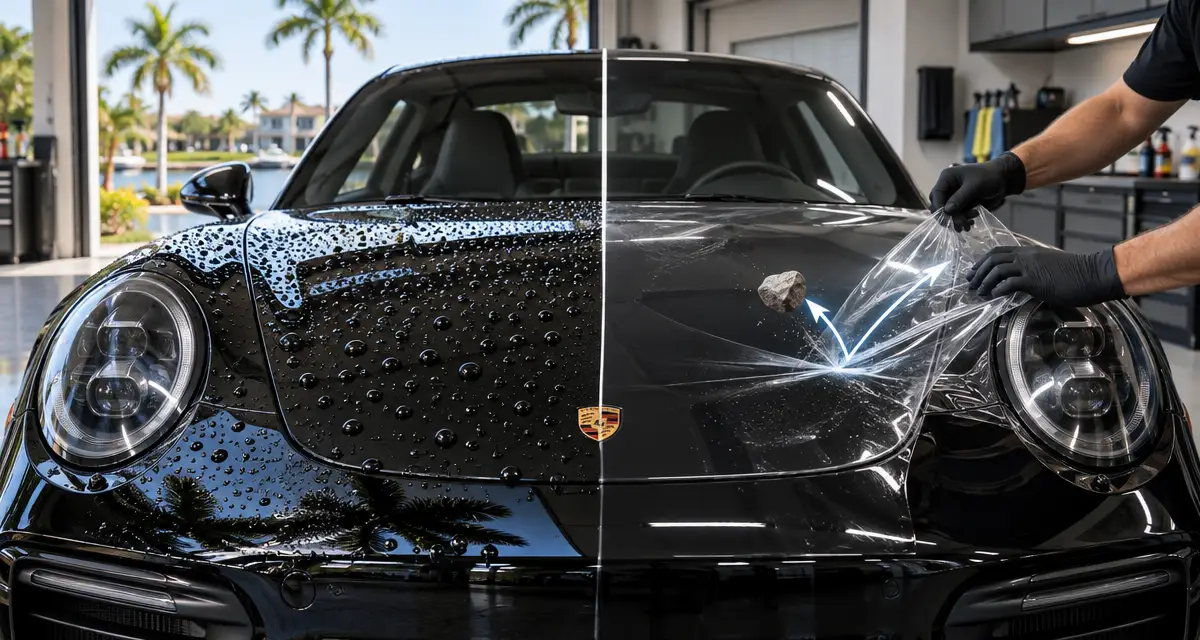
Choosing the best way to protect your car's paint can be confusing. Both ceramic coatings and paint protection film (PPF) offer incredible defense against the elements, but they excel in different areas. The right choice depends on your specific needs, driving habits, and what you want to protect your vehicle from most.
Ultimately, PPF is best for defending against physical impacts like rock chips and scratches, while ceramic coatings are superior for chemical resistance, UV protection, and providing a high-gloss, easy-to-clean finish. Let's explore the details of each to help you decide.
What Is Paint Protection Film (PPF)?
Paint Protection Film, often called PPF or a clear bra, is a thick, transparent layer of urethane film applied directly to your vehicle's painted surfaces. Think of it as a heavy-duty, invisible shield for your car. Its primary job is to absorb physical damage that would otherwise chip, scratch, or scuff your paint.
According to industry leader 3M, a quality paint protection film is designed to guard against a variety of hazards, including:
- Stone chips
- Scratches
- Bug damage
- Road tar
- Minor abrasions
- Stains from environmental contaminants
One of the most remarkable features of modern PPF is its self-healing capability. Minor scratches and swirl marks on the film's surface will disappear with exposure to heat, such as from the sun or a heat gun. This means the film can maintain a smooth, flawless appearance for years, all while the paint underneath remains in pristine condition.
What Is Ceramic Coating?
A ceramic coating is a liquid polymer that is applied by hand to the exterior of a vehicle. The coating chemically bonds with the vehicle’s factory paint, creating a semi-permanent, rigid layer of protection. It is not a wax or sealant that washes away after a few months; it's a durable shield that becomes part of the surface itself.
The primary benefits of a ceramic coating are its incredible hardness, chemical resistance, and hydrophobic properties. As AAA notes in its guide on car finish protection, these coatings add another barrier against environmental contaminants and UV rays. This protective layer makes your car's surface slick and non-porous, preventing things like bird droppings, bug splatter, acid rain, and tree sap from etching into your clear coat.
Furthermore, the hydrophobic nature of ceramic coatings makes washing your car significantly easier. Water beads up and rolls off the surface, taking dirt and grime with it. This also results in a deep, glossy shine that enhances your car's color and keeps it looking freshly detailed for years.
Key Differences: Protection, Appearance, and Cost
While both options protect your paint, they function very differently. Understanding these distinctions is key to making the right investment for your vehicle in Naples.
Protection: Impact vs. Chemical
The most significant difference lies in the type of protection offered.
- Paint Protection Film (PPF) is the undisputed champion of impact resistance. Its thick, absorbent nature is specifically engineered to stop physical damage from rock chips, road debris, and scratches. A ceramic coating is too thin and brittle to stop a rock from chipping the paint.
- Ceramic Coating is the master of chemical resistance and surface hardness. It creates an impenetrable barrier against acidic contaminants and protects your paint from fading and oxidation caused by Florida's intense UV rays. While it offers some scratch resistance against minor swirl marks, it cannot prevent damage from physical impacts.
Appearance and Finish
Both products improve your car's look, but in different ways.
- Ceramic Coating is famous for the incredible gloss and depth of color it provides. It gives the paint a 'wet look' that is highly reflective and makes the color pop. The slick surface stays cleaner for longer.
- Paint Protection Film is designed to be optically clear and virtually invisible. A high-quality PPF will not alter the look of your paint color. While it doesn't add the same level of gloss as a coating, it perfectly preserves the finish underneath.
Durability and Longevity
Both are long-term solutions, but lifespans vary.
- PPF typically comes with a manufacturer's warranty of 5 to 10 years. It's a very durable product that holds up to daily driving conditions.
- Ceramic Coatings can last anywhere from 2 to 7+ years, depending on the quality of the coating, the number of layers applied, and how well it is maintained.
The Ultimate Solution: Using Both PPF and Ceramic Coating
You don't have to choose just one. For the ultimate level of protection, you can combine both. This is a popular option for enthusiasts and owners of high-end vehicles who want complete peace of mind.
The standard process is to apply paint protection film (PPF) to the most vulnerable, high-impact areas of the car. This typically includes the front bumper, full hood, front fenders, and side mirrors. After the film is installed, we can apply professional ceramic coatings over the entire vehicle, including the areas covered with PPF.
This hybrid approach provides the best of both worlds. You get the unmatched impact resistance of PPF on the parts of your car that need it most, plus the gloss, UV protection, and easy-to-clean hydrophobic properties of a ceramic coating over every inch of your vehicle.
Frequently Asked Questions
How much does PPF vs. ceramic coating cost?
Generally, installing PPF is more expensive than applying a ceramic coating due to the higher material cost and the labor-intensive application process. The final price for either service depends on the size of the vehicle, the specific product chosen, and the amount of coverage desired. We always recommend a consultation to get an accurate quote for your car.
Is paint correction required before application?
Yes, absolutely. Both PPF and ceramic coatings seal whatever is underneath them. To achieve a flawless finish and ensure proper bonding, the paint must be perfectly clean and free of swirls, scratches, or other imperfections. A thorough paint correction is a critical first step for a quality installation.
Which one is easier to maintain?
Ceramic coatings make routine washing much easier. The hydrophobic surface sheds water and dirt, meaning less effort is required to keep the car clean. Both PPF and ceramic coatings should be washed using pH-neutral car soap and safe washing techniques to ensure their longevity. Avoid automatic car washes with harsh brushes.