
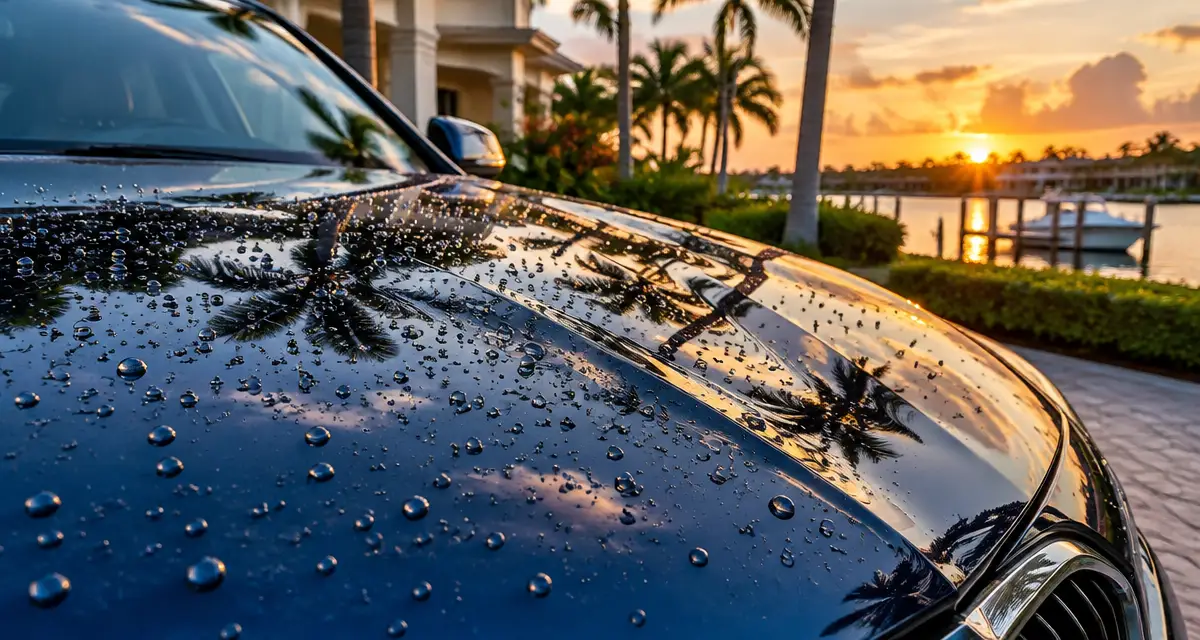
Yes, living near the coast in Collier County significantly affects your car’s paint and finish. The constant exposure to salt air, high humidity, and intense Florida sun creates a harsh environment that accelerates paint degradation, fading, and corrosion. Protecting your vehicle is not just about aesthetics; it's about preserving its value and structural integrity.
The Coastal Challenge: Salt, Sun, and Humidity in Naples
For car owners in Naples and the surrounding coastal areas, the beautiful scenery comes with a unique set of challenges for vehicle maintenance. The combination of three main factors creates a perfect storm for damaging your car's exterior.
First, there's the salt. Sea spray, carried by the breeze, deposits a fine layer of salt on every surface, including your car. According to a report from the Transportation Research Board, this salt, combined with moisture, is a primary driver of corrosion on vehicles. Salt chemically attacks the clear coat and paint, slowly eating away at the finish.
Second, high humidity keeps your car's surface damp, allowing the salt to remain active and begin the corrosive process. This moisture also helps other environmental contaminants, like dust and pollen, stick to your paint, creating a gritty film that can cause scratches when wiped away improperly.
Finally, the intense Florida sun bombards your car with ultraviolet (UV) radiation. UV rays break down the clear coat, leading to oxidation. This results in a dull, chalky, or faded appearance, and once the clear coat is compromised, the paint underneath is left vulnerable to further damage.
Telltale Signs of Coastal Damage on Your Vehicle's Paint
Not sure if your car is already showing signs of coastal wear? Here are a few things to look for:
- Dull or Faded Paint: One of the first signs of UV damage is a loss of gloss and vibrancy.
- Rough Surface Texture: Run your hand over a clean panel. If it feels gritty or rough, it could be a buildup of bonded contaminants and salt.
- Tiny Rust-Colored Specks: These are often signs of iron particles embedding in your paint and beginning to rust, a common issue in humid, salty air.
- Etched Water Spots: Mineral deposits from salt spray and rain can etch into the clear coat if left to bake in the sun.
- Peeling or Bubbling Clear Coat: This is a sign of advanced damage where the protective clear coat has failed, leaving the color coat exposed.
Beyond the Paint: Protecting Your Car's Undercarriage
While protecting your car's paint is crucial for its appearance, the corrosive effects of salt air don't stop there. Salt spray works its way into every nook and cranny of your vehicle, including the undercarriage. Your car’s frame, suspension components, brake lines, and exhaust system are all made of metal and are highly susceptible to rust.
Corrosion on these critical components is not just a cosmetic issue; it can be a serious safety hazard. It's essential to distinguish between protecting painted surfaces and performing regular maintenance on the vehicle's underbody. Regular undercarriage washes are a must for any coastal vehicle to rinse away accumulated salt and grime.
Proactive Protection: Ceramic Coatings and PPF for Coastal Cars
Instead of just reacting to damage, the best strategy is proactive protection. This is where modern solutions like ceramic coatings and paint protection film (PPF) become invaluable for Collier County car owners.
A professional-grade ceramic coating is a liquid polymer that is applied to your car’s exterior and chemically bonds with the factory paint. It creates a durable, semi-permanent layer of protection. This glassy shield is hydrophobic, meaning it repels water and makes it much harder for salt and grime to stick. It also offers superior UV protection, preventing oxidation and fading. A ceramic coating makes washing your car faster and easier, and it preserves that deep, glossy shine for years.
For an even higher level of defense, consider Paint Protection Film (PPF). This ultra-thin, transparent urethane film acts as a physical barrier, protecting your paint from rock chips, scratches, and other physical impacts that can compromise the paint and create an entry point for rust.
Essential Maintenance Tips for Car Owners in Collier County
- Wash Frequently: Wash your car every one to two weeks to remove salt and other contaminants before they can cause damage.
- Rinse the Undercarriage: Always spray the underbody of your car to remove hidden salt deposits.
- Use Proper Washing Techniques: Use a pH-neutral car soap and the two-bucket wash method to avoid scratching the paint.
- Park Smart: Whenever possible, park your car in a garage or under a covered carport to shield it from direct sun and salt spray.
- Schedule Professional Care: Regular professional auto detailing can address issues you might miss and is essential for long-term preservation.
Frequently Asked Questions
How often should I wash my car if I live on the coast in Naples?
It is highly recommended to wash your vehicle at least once every one to two weeks. This frequency helps remove the corrosive salt deposits before they have a chance to damage your paint and undercarriage.
Is a ceramic coating worth it for a coastal car?
Absolutely. A ceramic coating provides a robust, long-lasting barrier against the specific challenges of a coastal environment, including salt, humidity, and intense UV rays. It makes maintenance significantly easier and keeps your car looking its best.
Will a ceramic coating prevent all rust?
It provides excellent protection against surface corrosion on the painted panels it covers. However, rust can still form on exposed metal parts, especially on the undercarriage. A ceramic coating is a critical part of a complete protection strategy, which must also include regular underbody cleaning and inspection.
Sources
- Effects of Deicing Salt on Vehicle and on Corrosion of Highway Structures - Transportation Research Board