
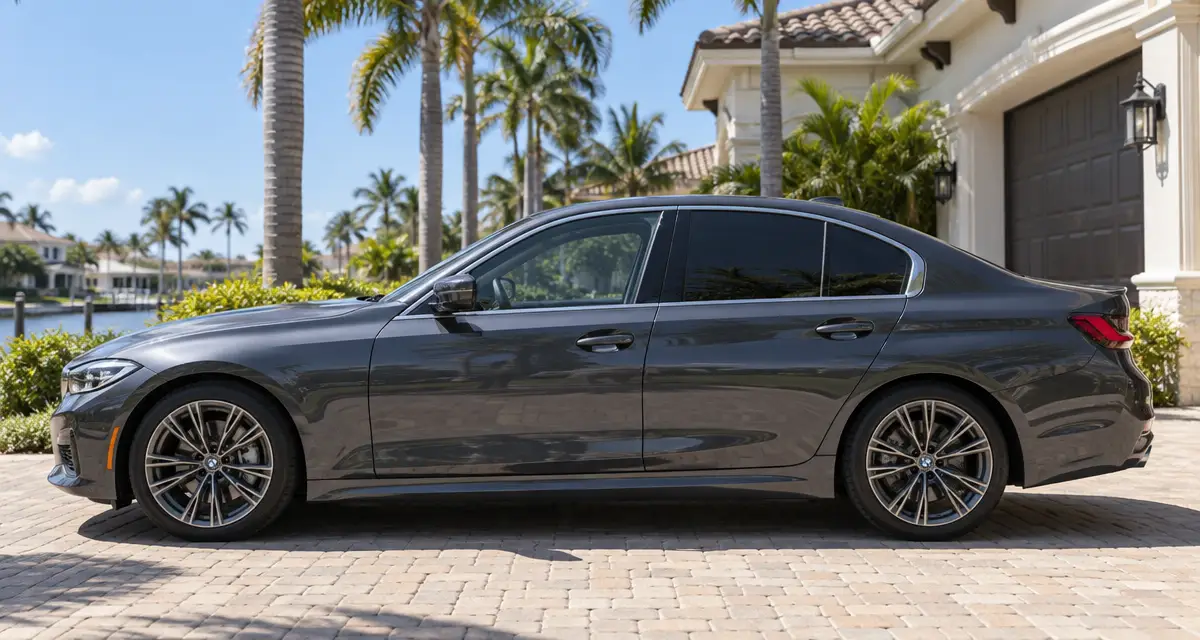
Understanding Florida's window tinting laws is crucial for any vehicle owner in the state. For passenger cars, the front side windows must allow more than 28% of light to pass through. The rules differ slightly for back windows and for other vehicle types like SUVs, so it's important to know the specifics to ensure you're compliant.
Understanding VLT and Florida Tint Law
When discussing window tint, the most important term to know is Visible Light Transmission (VLT). VLT is the percentage of visible light that can pass through your window glass and the applied tint film. A lower VLT percentage means a darker tint.
Florida's regulations, detailed in Florida Statute §316.2953, specify the minimum VLT percentages required for different windows on your vehicle. It's important to note that the law measures the total VLT of the window, which includes both the factory glass and any aftermarket film applied. This is why professional installation is key; a reputable shop understands how to combine film and glass to meet legal standards.
Legal Tint Levels for Passenger Cars (Sedans & Coupes)
For most passenger cars driving on Naples roads, the window tint laws are very specific. Adhering to these limits helps you avoid tickets and ensures proper visibility for safe driving.
- Windshield: Non-reflective tint is allowed only on the top portion of the windshield, above the manufacturer's AS-1 line. Nothing is permitted below this line.
- Front Side Windows: These are the windows next to the driver and front passenger. They must have a VLT of 28% or higher.
- Back Side Windows: The windows for the rear passengers must have a VLT of 15% or higher.
- Rear Window: The back windshield must also have a VLT of 15% or higher. If the rear window is tinted, the vehicle must have dual side mirrors.
Legal Tint Levels for SUVs, Trucks, and Multi-Purpose Vehicles
Florida law provides slightly different rules for multi-purpose vehicles, which include SUVs, trucks, and vans. While the front windows have the same requirement as cars, the rear sections can be significantly darker.
- Windshield: Same as passenger cars, with non-reflective tint allowed only above the AS-1 line.
- Front Side Windows: Must have a VLT of 28% or higher.
- Back Side and Rear Windows: These windows can be tinted to a VLT as low as 6%.
Beyond Legal Compliance: The Benefits of Quality Window Film
While staying legal is essential, professional window tinting offers much more than just a sleek appearance. High-quality window films provide significant advantages, especially in the sunny climate of Naples, Florida.
Superior UV Protection
One of the most critical benefits is protection from harmful ultraviolet (UV) radiation. According to the Skin Cancer Foundation, certain window films can block more than 99% of UVA and UVB rays without needing to be dark. This helps protect your skin during your daily commute and preserves your vehicle's interior from fading and cracking.
Heat Rejection and Comfort
A ceramic window tint can reject a substantial amount of solar heat, keeping your car's interior much cooler. This reduces the strain on your air conditioning system, potentially saving fuel, and makes for a more comfortable ride on hot days.
Reduced Glare
Bright sun and headlight glare can be distracting and dangerous. Window tint significantly cuts down on this glare, reducing eye strain and improving visibility for safer driving, especially during sunrise and sunset.
Enhanced Privacy and Security
Tinted windows provide an extra layer of privacy for you and your passengers. They also conceal valuables left inside your car, deterring potential smash-and-grab thefts. In the event of an accident, the film can also help hold shattered glass together.
Frequently Asked Questions
What are the rules for tint reflection in Florida?
Florida law also limits how reflective your window tint can be. For both passenger cars and multi-purpose vehicles, the front side windows cannot be more than 25% reflective. The back side windows must not be more than 35% reflective.
What are the penalties for having illegal window tint in Florida?
If your window tint is darker than the legal limit, you can receive a non-moving traffic violation, which comes with a fine. You may also be required to remove the illegal tint from your vehicle. According to Florida Statute §316.2955, a professional installer must provide a compliance label between the film and the glass on the driver's side window.
Are there medical exemptions for darker tint?
Yes, Florida law allows for medical exemptions for individuals with certain conditions (like lupus or sun sensitivity) that require additional protection from the sun. This requires a specific application and a physician's certification submitted to the Florida Highway Safety and Motor Vehicles department.